
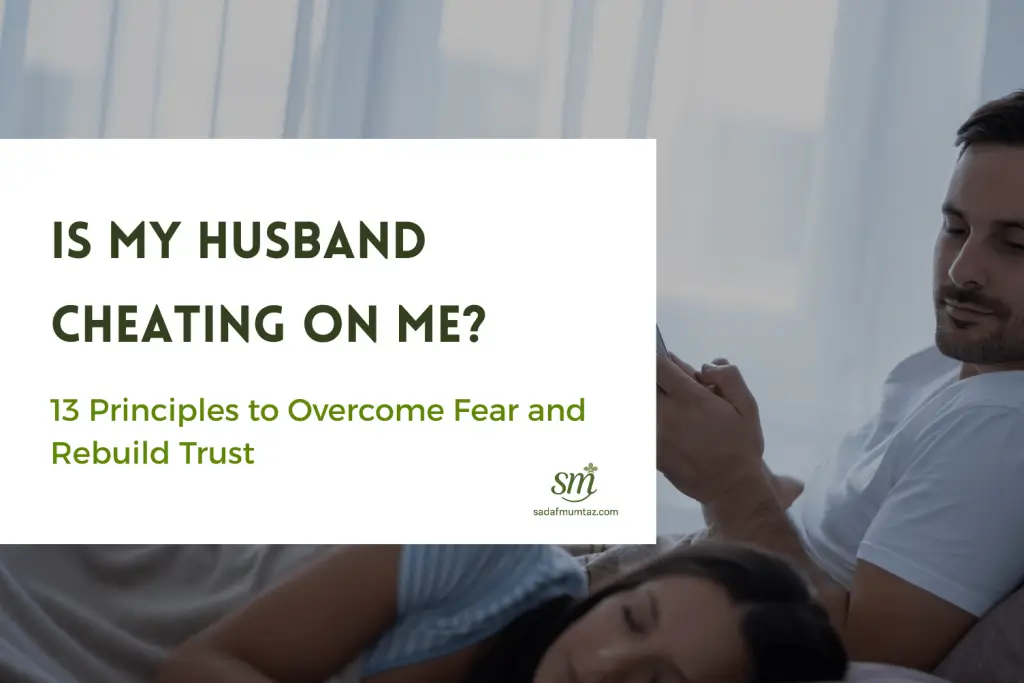
If you are searching “husband is cheating,” you are likely not calm.
You are probably:
- Replaying conversations
- Noticing subtle changes
- Feeling emotional distance
- Checking patterns in your head
- Wondering if your intuition is warning you — or if anxiety is taking over
The most painful part is not just the possibility of infidelity.
It is the loss of emotional safety.
When emotional safety feels threatened, your nervous system goes into survival mode. Thoughts accelerate. Fear gets louder. You may feel an urgent need to know right now.
Before you investigate, accuse, or collapse into panic, we need to stabilize you first.
Because clarity comes after calm — not before it.
Why Fear of Cheating Feels So Overwhelming for Women
For many women, emotional connection equals security.
When connection weakens, the nervous system reacts as if something essential is at risk. You may experience:
- Hypervigilance
- Overthinking
- Sleep disruption
- Emotional reactivity
- Obsessive mental loops
This response is intensified if:
- You have experienced betrayal before
- You grew up in emotional instability
- You feel exhausted or unsupported
- You are in postpartum, midlife, or transition
- Communication has been deteriorating for months
Fear does not automatically mean he is cheating.
But fear does mean your emotional safety feels compromised.
Before we analyze him, we must stabilize you.
Fear vs Intuition: How to Tell the Difference
One of the most common questions I hear in relationship coaching is:
“How do I know if this is intuition or just anxiety?”
Fear feels urgent and chaotic.
Intuition feels steady and grounded.
Fear:
- Demands immediate answers
- Pushes investigation
- Fuels worst-case scenarios
- Disrupts sleep
- Creates emotional panic
Intuition:
- Feels calm, not frantic
- Does not rush you
- Is clear rather than overwhelming
- Leaves room for discernment
If your body feels activated, tense, obsessive, and urgent — that is usually fear.
True intuition does not scream. It whispers.
If you cannot hear the whisper, it means fear needs regulation first.
Subtle and Overt Signs Your Husband May Be Cheating
Let’s address this directly.
There are behavioral patterns that sometimes correlate with infidelity. None alone prove cheating. But consistent patterns deserve attention.
Possible red flags include:
- Sudden increased secrecy with phone or devices
- Password changes without explanation
- Emotional withdrawal without discussion
- Defensive reactions to neutral questions
- Unexplained schedule changes
- Increased criticism toward you
- Reduced intimacy combined with distance
- A sudden need for privacy that did not exist before
- Gaslighting when concerns are calmly expressed
Emotional infidelity often begins before physical infidelity. Signs of emotional affairs include:
- Excessive texting with one person
- Emotional sharing outside the marriage
- Protecting that relationship from transparency
- Comparing you negatively to someone else
- Defensiveness when that person is mentioned
Important:
Red flags require observation — not panic.
Patterns matter more than isolated moments.
What Not to Do When You Suspect Cheating
When fear rises, the instinct is to regain control quickly.
Common reactive behaviors include:
- Checking his phone secretly
- Monitoring social media obsessively
- Interrogating aggressively
- Withdrawing emotionally to “punish”
- Pretending nothing is wrong
- Asking loaded or indirect questions
These responses usually increase anxiety and damage trust — whether he is cheating or not.
Emotional leadership requires something harder:
Pause.
Regulate first. Then respond strategically.
How to Stabilize Yourself Before You Confront
Before any conversation, ask yourself:
- Am I emotionally regulated?
- Am I seeking clarity or seeking reassurance?
- Am I prepared to hear difficult information calmly?
Grounding practices help:
- Deep breathing to slow physiological activation
- Prayer or spiritual grounding if faith is important to you
- Journaling facts vs assumptions
- Naming fears without obeying them
- Taking 48 hours before initiating serious confrontation
Stability protects your dignity.
You want answers — but not at the cost of losing yourself.
Reclaiming Your Emotional Stability After Betrayal
When you discover or suspect infidelity, your world can shrink around the betrayal.
It is easy to:
- Stop caring for your body
- Withdraw from friends
- Obsess over his behavior
- Make your identity about the affair
This weakens you emotionally.
The most powerful shift is not trying to control him.
It is strengthening yourself.
Reclaim routines that anchor you:
- Physical movement
- Grooming and self-respect
- Social connection
- Spiritual grounding
- Structured daily habits
This is not about competing with another woman.
It is about restoring your own emotional authority.
When you are stable, centered, and dignified:
- You stop chasing
- You stop collapsing
- You stop reacting impulsively
- You make clearer decisions
Confidence after betrayal is not performance.
It is self-protection.
How to Have the Conversation Without Destroying Trust
When you are grounded, you can speak from clarity rather than accusation.
Instead of:
“Are you cheating on me?”
Try:
“I’ve been feeling some emotional distance lately and it’s affecting me. I need to understand what’s happening between us.”
Instead of:
“Why are you hiding your phone?”
Try:
“I’ve noticed more privacy around your phone, and it’s making me feel unsettled. Can we talk about that?”
Calm communication increases the likelihood of honesty.
Accusation increases defensiveness.
Your tone matters more than your wording.
If He Denies Everything
Denial alone does not equal truth or deception.
Watch:
- His consistency over time
- Whether behavior aligns with words
- Whether communication improves
- Whether transparency increases voluntarily
If he becomes hostile, dismissive, or gaslights you, that is data.
If he becomes open, willing, and collaborative, that is also data.
Truth is often revealed in patterns, not arguments.
If the Affair Is Confirmed
This is where many articles stop. Real life begins here.
If your husband is cheating:
You will experience shock, grief, anger, humiliation, and destabilization.
Do not make permanent decisions in the first emotional wave.
Initial steps include:
- Stabilize yourself emotionally before major decisions
- Avoid public exposure or impulsive retaliation
- Assess whether he shows genuine remorse
- Determine if he is willing to cut off contact completely
- Require transparency moving forward
Rebuilding trust requires:
- Full disclosure
- Consistent transparency
- Accountability
- Willingness to repair
- Emotional responsibility
If he minimizes, blames you, or refuses change, clarity becomes easier.
Reconciliation requires two committed adults.
Can a Marriage Survive Infidelity?
Yes — but not through denial.
Healing requires:
- Emotional honesty
- Structured rebuilding of trust
- Consistent behavior change
- Trauma processing
- Clear boundaries
Many marriages become stronger after crisis — not because betrayal is good, but because both partners confront what was neglected.
However, survival is not the only metric.
Your emotional safety matters.
When Suspicion Alone Is Destroying the Marriage
Sometimes there is no affair.
But chronic suspicion creates distance.
If fear persists without evidence, deeper issues may be driving it:
- Attachment anxiety
- Unresolved betrayal trauma
- Low self-worth
- Emotional neglect
- Communication breakdown
In those cases, the work is not surveillance.
The work is internal stability and relational repair.
How Relationship Coaching Helps in This Season
In private relationship coaching, we do not focus on spying or proof-seeking.
We focus on:
- Regulating fear
- Strengthening self-trust
- Clarifying communication
- Setting emotional boundaries
- Assessing reality without panic
- Making grounded decisions
Whether your husband is cheating or not, your strength matters.
When you are emotionally grounded:
- You stop spiraling
- You communicate clearly
- You observe without panic
- You protect your dignity
- You make decisions from clarity
This is emotional authority.
Frequently Asked Questions
Can fear make me believe he is cheating when he isn’t?
Yes. Anxiety can distort perception. Regulation must come before conclusions.
Is it wrong to check his phone?
Secret surveillance usually increases anxiety and damages self-respect. Calm communication is more powerful.
How long should I wait before addressing concerns?
Wait until you are regulated, not reactive.
What if I was cheated on before?
Past trauma amplifies present fear. That pain deserves healing.
When should I seek support?
If anxiety feels constant, communication feels impossible, or you feel paralyzed between confrontation and silence.
Final Words If You’re Afraid Your Husband Is Cheating
You do not need to panic to protect yourself.
You do not need to rush to uncover the truth.
You do not need to lose your dignity in the process.
Clarity is strongest when it comes from calm.
Whether your marriage is facing suspicion, emotional infidelity, or confirmed betrayal — your stability is the foundation.
If you want support navigating this season with strength, emotional intelligence, and faith-centered steadiness, you can learn more about relationship coaching for women or book a private session when you are ready.
No urgency.
Only clarity.